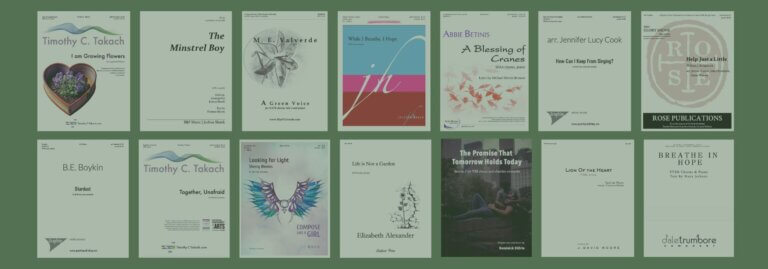
If the headline of this article has piqued your interest, chances are you’re 1) a Unitarian Universalist church music director or 2) wondering whether this repertoire is relevant to your school, university, community, professional, or religious music program. Well, we’re here to share some repertoire selections you may find surprisingly relevant to your own music program! Whether you’re dreaming up an interfaith worship service, a seasonal celebration, a social advocacy-themed concert, or a community engagement event, we hope you’ll be inspired by the honesty, possibility, and joy of these programming gems.
Religious tolerance has been a core tenet of Unitarian Universalism since its inception in 16th-century Hungary. Modern Unitarian Universalists consciously worship alongside people whose specific beliefs may not completely align with their own, trusting that this diversity will deepen their own spiritual journey.
As you can well imagine, composing and selecting music for such a diverse community calls for a whole lot of vision and flexibility! It also creates opportunities to present songs in unusual and powerful contexts — something all music directors strive for. That’s why we’re excited to be sharing repertoire and programming ideas here and in a series of Graphite newsletters later this year.
To make this a practical resource, we’ve organized our featured repertoire according to common themes and church celebrations:
Wisdom from the World’s Religions
ELIZABETH: A respectful understanding of world religions is so important to Unitarian Universalists that our middle school classes spend the better part of a year learning about and visiting other houses of worship! We also delve into familiar holy days and readings, discovering how they speak to us in our own time.



Music for the Earth and Its Creatures
SAUNDER: One of the core principles of Unitarian Universalism is respect for the interdependent web of life. Our church year is bookended by two celebrations of this web: Water Communion in late August or September; and Nobert Capek’s Flower Communion in June. Both services symbolize unity in diversity, as individuals bring their unique offerings — water or flowers — into a shared vessel or bouquet, creating a collective expression of community and interconnectedness. Throughout the year, we mark the seasons with other celebrations of life’s abundance: a Blessing of the Animals service (often during the feast of St. Francis), a service on harvest and gratitude in the fall, and an Earth Day service in the month of April. Each service is a reminder that we are part of something larger, connected to one another and to the living world around us.
-
-
Fire-Flowers (high voice)
Difficulty: 4Duration: less than 3 min. -

Fire-Flowers (medium voice)
Difficulty: 4Duration: less than 3 min. -
Fire-Flowers (low voice)
Difficulty: 4Duration: less than 3 min. -

-

-
-
“Religious tolerance has been a core tenet of Unitarian Universalism since its inception. Modern Unitarian Universalists consciously worship alongside people whose specific beliefs may not completely align with their own.”
— Alexander and Choi
Music for Wintertime
ELIZABETH: The winter season is rich with powerful stories and metaphors. The fallow fields enter a time of rest. The dark nights of solstice require us to nurture strength of spirit until the return of the light. Chanukhah stories bring families together to rededicate themselves to community. Even the age-old Christmas story challenges us in our own time to welcome the stranger and care for children everywhere.
Music for Social Advocacy, Justice, Liberation, and Belonging
SAUNDER: Justice, equity, inclusion, and belonging are core values of Unitarian Universalism. These principles guide and inspire our ministry and shared community in all we do — through worship, action, service, advocacy, and outreach. The following pieces not only reflect these ideals but joyfully celebrate them as expressions of positive change in the wider world and within ourselves.



Music for Stewardship, Calling, and Community Engagement
ELIZABETH: As the worship leaders at my church say every single Sunday, our mission is to build a community that “encourages lives of integrity, service, and joy.” Although your own music organizations may not say this in so many words, I’m betting “service” is at the very heart of their missions as well! That’s why so many of our most beloved songs are those that guide our steps as we build a more just and compassionate world.
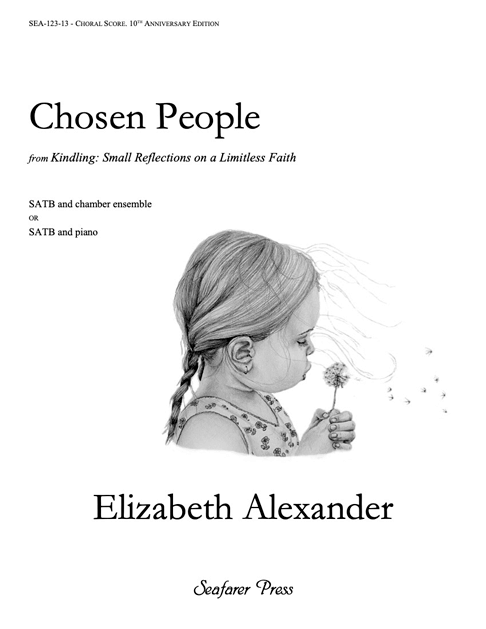


We’ll be taking a deeper dive into these songs in upcoming articles!

Composer and lyricist Elizabeth Alexander grew up in the Carolinas and Appalachian Ohio. Her love of music, language, and challenging questions is reflected in her catalog of over 150 compositions, many of which were written with liberal religious worship in mind. A Unitarian Universalist for over 40 years, she is an active member of Unity Church-Unitarian in St. Paul, MN.

LA-based Filipino-Chinese composer Saunder Choi brings the totality of his life experience to his work as a professional singer, immigrant, and LGBTQ+ advocate. In addition to his role as Director of Music at the Unitarian Universalist Congregation of Santa Monica, he was Music Coordinator of the 2022 Virtual Unitarian Universalist Association General Assembly and Music Director of the 2024 public worship service of Diverse and Revolutionary Unitarian Universalist Multicultural Ministries (DRUUMM).