
By Dale Trumbore
Jocelyn Hagen and Timothy C. Takach had been searching for a name for their new publishing company for months when it finally arrived in the unlikeliest of places: a Red Lobster. As they sat by the bar waiting for a table, one of them suggested “Graphite.” At the time, they didn’t imagine that their newly-named company would eventually celebrate its twentieth anniversary.
Hagen and Takach decided to start a music publishing company after observing that few music publishers were willing to take a risk on challenging pieces written by lesser-known composers. Though the couple was busy composing music for the ensembles in which they sang, they struggled with how to make the leap from those commissions to getting scores into conductors’ hands.
Takach remembers thinking, “What do we do with this music? We’ve got to start a storefront to sell it, but why don’t we do it together with other like-minded people? There’s got to be more people like us that need this service.” He and Hagen approached starting their business with what they describe as a naïve optimism. “It was a grand experiment,” Hagen says. “I think that as artists, we do the same thing, right? We take these risks in our work and sometimes they pay off, and sometimes they don’t.”

Hagen and Takach founded Graphite Publishing in Spring 2006 but weren’t married until later that year, on December 30. They brought the same optimism to their marriage that they brought to their new company, diving into both endeavors with “vigor, much excitement, and passion,” Hagen says. “We didn’t think much about the possibility of either of those things failing. We were bright-eyed, and I think that’s pretty magical.”
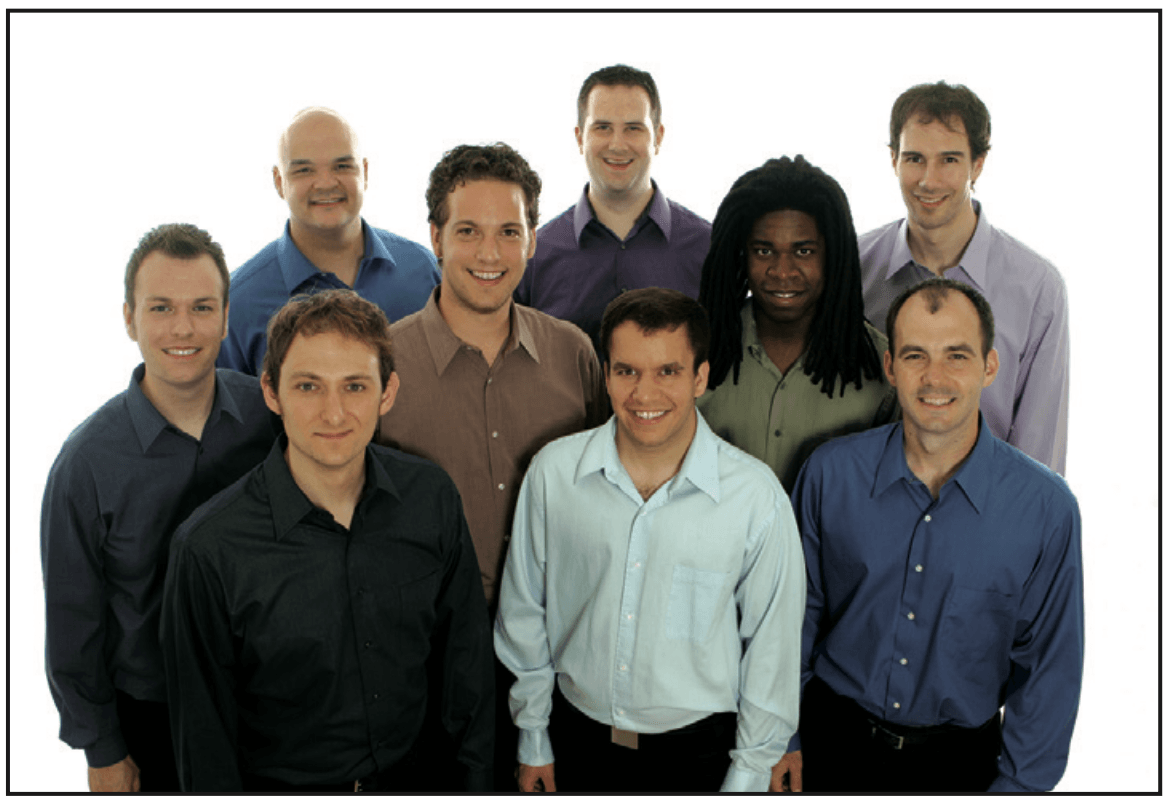
In 2006, Takach was singing in Cantus, a Minnesota-based professional low-voice ensemble. While most choral music was still sold and distributed as paper scores, Takach was already “waist deep in digital delivery online,” he says, given his experience designing Cantus’s website and selling MP3 downloads. Though there was no existing model for how to sell PDF scores online, he and Hagen decided to pursue digital score sales with Graphite. The closest model they could find for inspiration was iTunes, which was selling single tracks for a dollar. They decided to price their music at the same rate: a dollar per score.
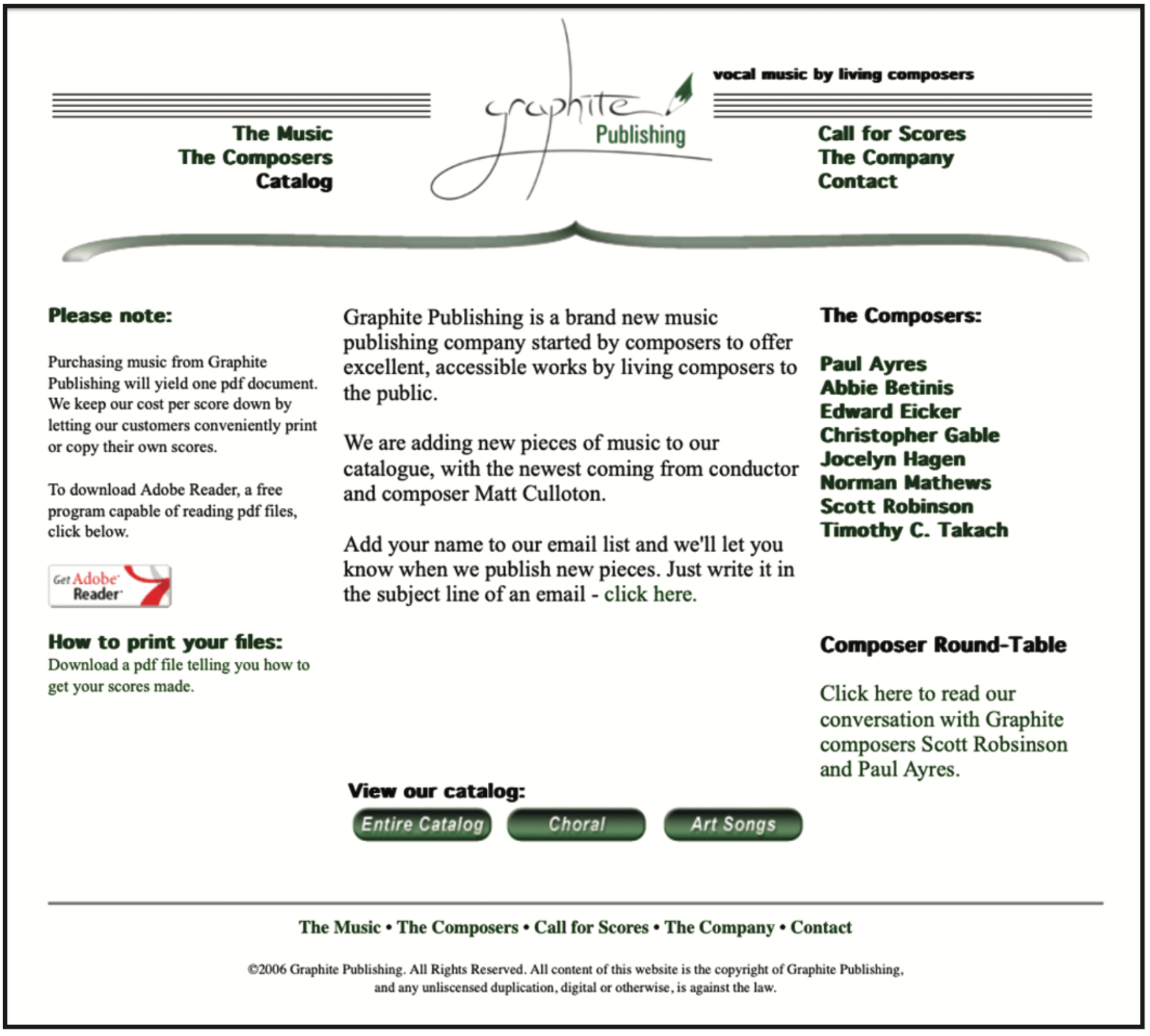
Takach launched the first website in early summer of 2006, then went to bed. The next morning, he woke up to Graphite’s first score sale. “It was a piece for tenor-bass choir, and I think it sold ten copies. I thought, ‘Oh my God, it’s working,’” he says. He still doesn’t know how the customer found a website that had gone online only twelve hours earlier, but it felt like a good sign.
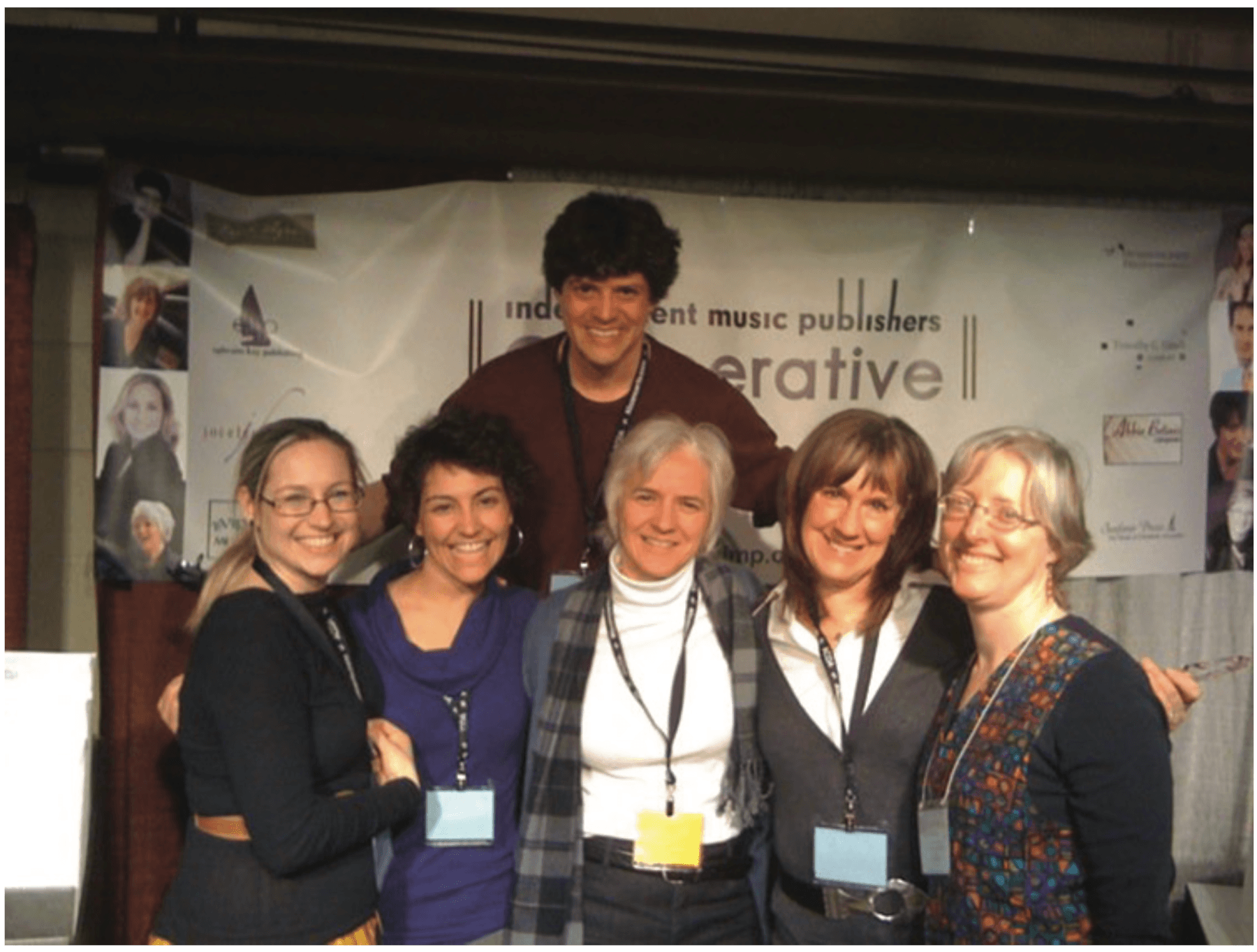
That first sale aside, Graphite’s path to success wasn’t always so simple. At one national choral conference, Hagen and Takach shipped printed music to their booth, then discovered that the shrink wrap on several packages had frayed open. The scores that spilled out had been stepped on, then tossed back into their palette covered in boot prints: hundreds of dollars of inventory lost in their biggest advertising event of the year. At another convention, Hagen arrived to find that the booth’s assigned location was underneath a staircase. Takach hadn’t been able to attend, and partway through the conference, Hagen got laryngitis.
“We’re stuck in this hole, and I’m not talking to anybody,” she recalls. “But people still came.”
Despite minor setbacks, she and Takach never considered giving up on Graphite. “We kept getting excited about the next phase of what the company could be,” Hagen says. “If those things hadn’t excited us, maybe the business would have failed.” But that excitement and the addictive energy of connecting with conductors and Graphite composers in person at conferences kept them going.
When they founded the company, neither Hagen nor Takach had experience working for a music publisher. Still, their work as composers indelibly shaped the way in which they structured their new company. Much of the conductor feedback they’ve gotten about Graphite expresses how grateful people are that Graphite offers recordings, full perusal scores, the text, composer notes, and even educational resources, when they’re available. For Takach and Hagen, highlighting such materials seemed natural. They presented Graphite’s catalog the same way they had already been pitching their music to conductors.
For the first decade of Graphite, Hagen and Takach viewed the business as a mom-and-pop shop, running the company almost entirely on their own. Takach handled design work — scores, website, promotional materials, and logo — as well as the functionality of the website and delivering PDF scores automatically. Hagen was on the artist relations side, handling contracts and engraving. Sometimes when she would return a call to help with a score purchase, the surprised customer would ask, “Is this Jocelyn?”
From the beginning, Takach and Hagen knew they didn’t want to run a vanity press. Instead, they wanted Graphite to be a curated brand that was built around the many composers at its heart. Composer Paul John Rudoi remembers asking Hagen and Takach in 2008, before he was published, what they look for when they are adding someone to the Graphite roster.
“They essentially said the goal of Graphite is to live in this liminal space between the big publishers and the self-publishers, and that they wanted it to be a gateway through which good music and good musicians can access each other,” Rudoi says. “I found that to be really meaningful.”
While no single quality defines the Graphite catalog, Takach describes “a depth to it that people can explore through repetition and further listenings and performances,” as well as “an immediate accessibility” where listeners can understand something about the music upon first listen. Hagen says Graphite looks for pieces that are musically interesting, well-crafted, and have something meaningful to say — pieces that are a joy to sing. “I think the craft has to be there, then the ideas, and the heart. We’ve created this wonderful community of composers. They are learning alongside us and improving their craft, and we all kind of lean on each other.”
Conductor Eugene Rogers has performed works by many Graphite composers. “Over the years, I’ve been continually struck by the remarkable breadth, variety, and imagination in [the] catalog,” he says. “It’s truly inspiring. I always know that when a score arrives from Graphite, it will be of the highest artistic and editorial quality.”
Takach and Hagen both think of publishing this music as a service. Perhaps because of that service-oriented mindset, they have struggled with how quickly to grow the company. “We always wanted the roster of composers to be small and the depth of the catalog to be deep,” Takach says, though that concept has evolved over time. Still, if Graphite takes on too many new pieces in a year, the small team may strain to edit, upload, and promote those new pieces. “Because we’re so small, we don’t accept very many people at any given time,” Hagen says.
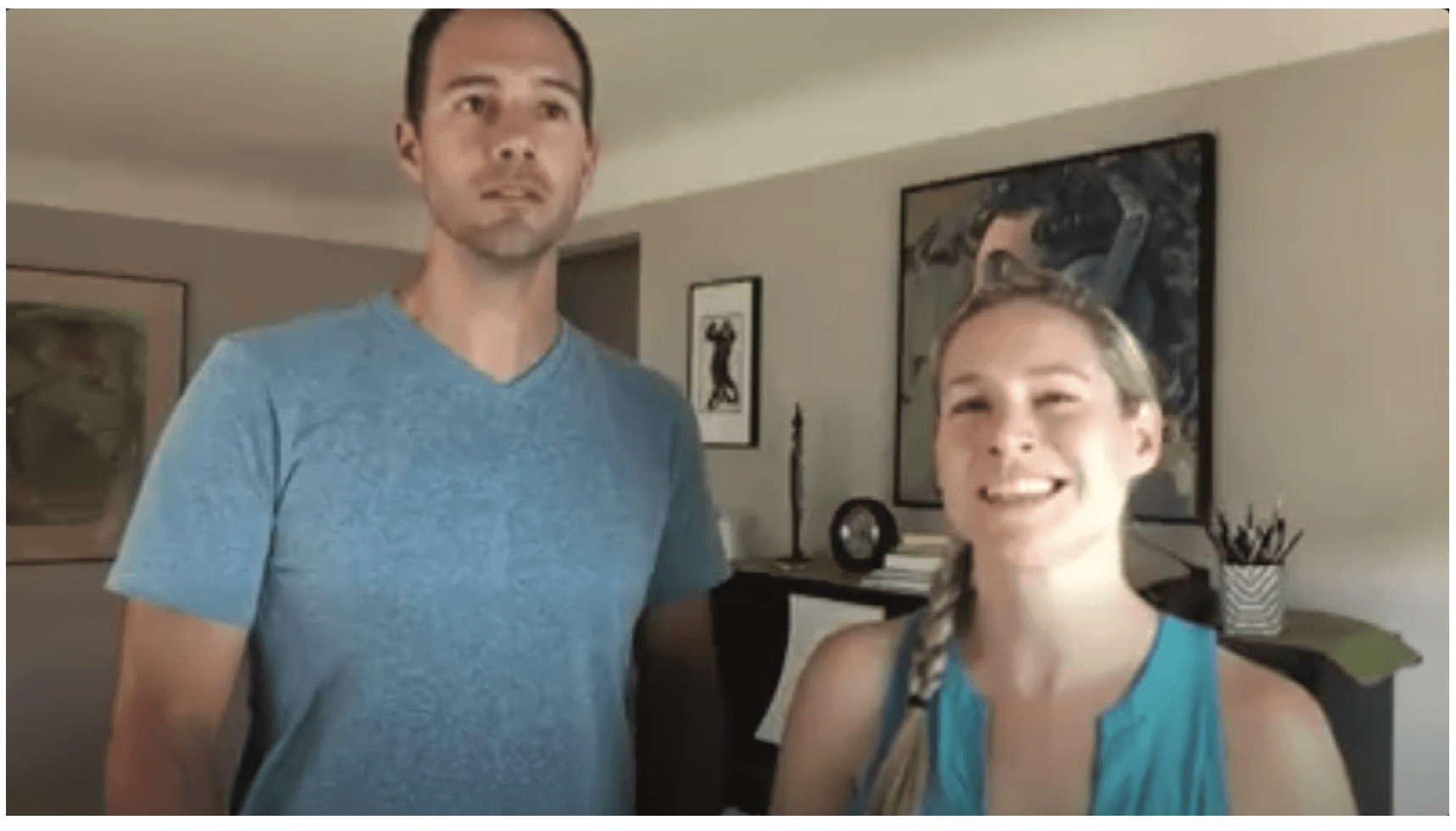
Counter-clockwise from the top right: Hagen and Takach at ACDA, 2017
Hagen and Takach as Nation in an early video, 2017
Poster and pin graphic from 2018
Prepping scores for ACDA, 2012
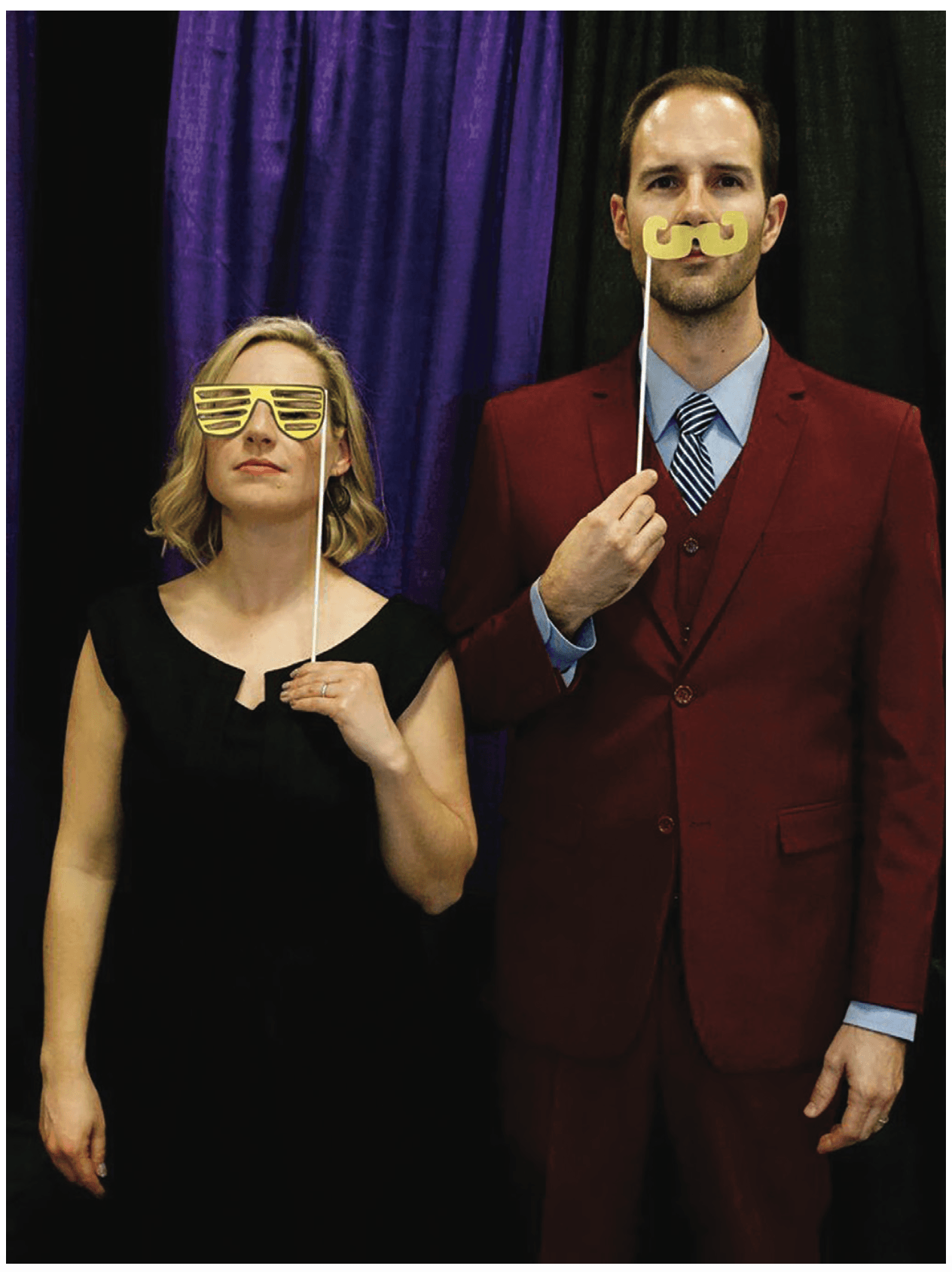
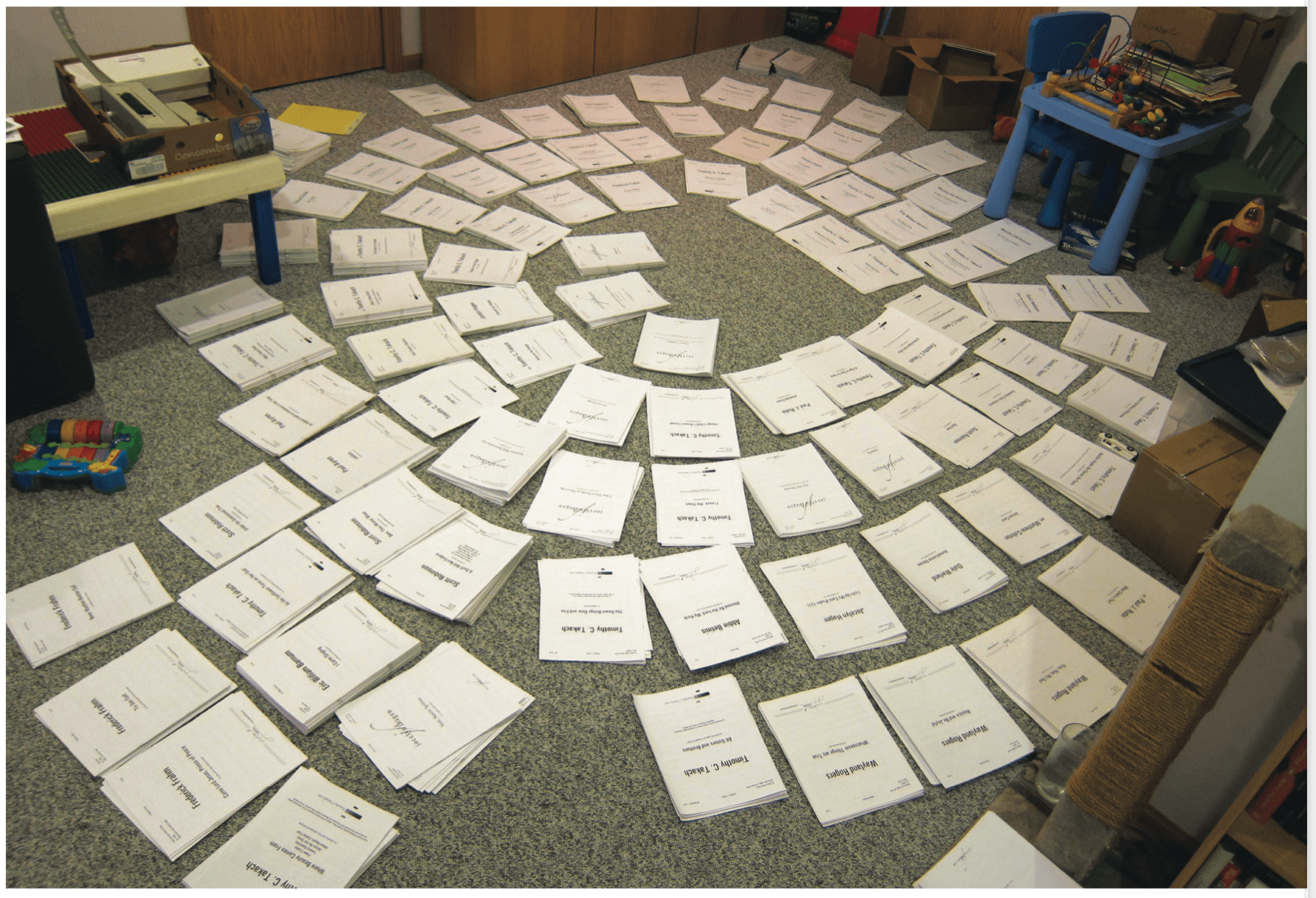
The couple originally founded Graphite as an experiment, but as that experiment became more successful, they found they couldn’t sustain the company with the same enthusiastic mom-and-pop approach that had seen them through the early years. By 2008, their own composing careers were flourishing and demanding more time, and they were now quite literally mom and pop to two young sons.
“There is a time when kids are little, and you’re going back and forth between writing and publishing and engraving, where you just have to do a lot of code switching in your brain,” Hagen says. With kids, it was tougher to muster the energy it took to fulfill their roles as parents, composers, and business owners. When you run a business as a parent, “there are moments where you succeed, and there are moments where you fail,” Takach says. “Working that balance out organically in time, I think, is the trickiest part.” Still, their sons have a front seat to what it takes to run a business, which Hagen and Takach hope may one day inspire them to build something themselves.

When Takach and Hagen first launched Graphite Publishing, they asked the late composer and self-publishing pioneer Stephen Paulus for business advice. Paulus told them they should definitely pursue this publishing company, but that it would take them ten years to earn a profit. That number might have daunted other business owners, but Takach and Hagen were undeterred. “He was exactly right,” Hagen says. “It was almost exactly ten years that it took for us to start making any [profit] from the site.” She notes that while people may assume that she and Takach make a lot of money from Graphite, they only take a small owner’s draw.
When the site finally became profitable in 2016, Graphite opened up the company’s publishing model and expanded into distribution. The addition of Graphite Marketplace allowed composers, conductors, and choruses to partner with Graphite to distribute scores through their individual imprints. In the following years, Hagen and Takach saw a large increase in the number of works and composers on the site. Hagen compares it to the huge growth cycle that’s happening within the company now, twenty years after its founding.
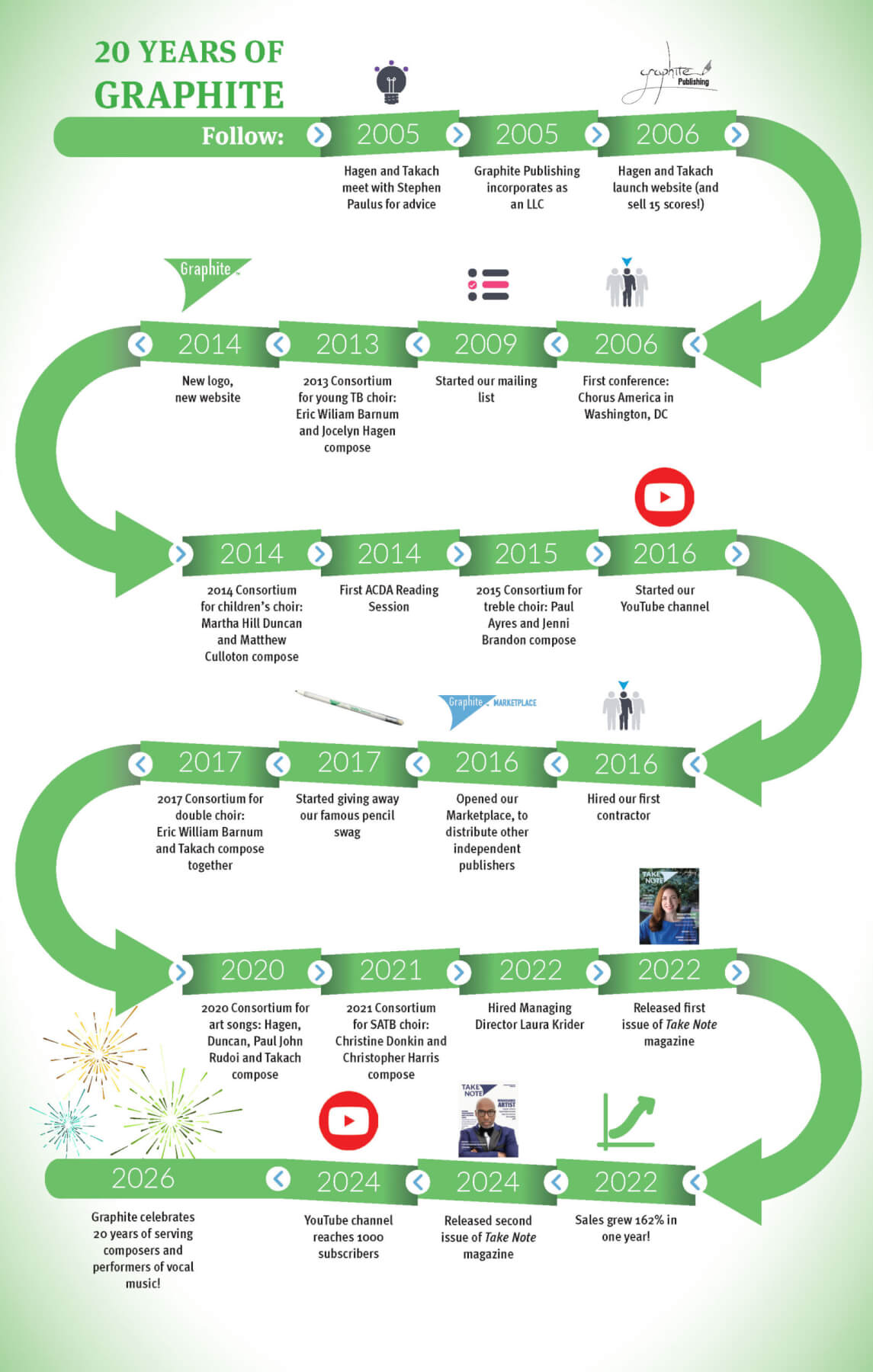
On this big anniversary, Hagen and Takach are looking ahead to the future. Hagen hopes to form a nonprofit arm of Graphite, one that supports diversity initiatives and serves as a mentor to independent composers who wish to publish with Graphite. The company also aims to one day offer support for school districts and other organizations with very low budgets, in the form of an initiative where Graphite could provide scores for free to these choirs but still pay composers their standard royalties.
Additional new resources could include releasing even more practice tracks, which Graphite launched in 2023, as well as other teaching resources for conductors and singers in the classroom. Hagen and Takach plan to continue holding the virtual town halls they launched in 2025, which offer a chance for composers and conductors in the Graphite “family” to connect with each other and discuss how Graphite is growing as a company. To find new composers and scores, Graphite has also launched an annual score submission period. Takach says Graphite is more committed now than ever to listening to the needs of conductors, finding out what they could use in the classroom and in rehearsal, and communicating those needs to the Graphite community.
For Hagen and Takach, the real richness in owning Graphite is the collection of people invested in the company: composers, conductors, and singers who trust what the brand represents. “We’ve built this company that represents people in a way that prioritizes their work, their ideas, and their intellectual property,” Takach says. Hagen adds that since the company’s founding, she and Takach have always been open to what’s new and what’s next, continuing to evolve with the times. Over the next twenty years, Hagen and Takach plan to remain as flexible and optimistic as ever as they continue to work with collaborators who share their blend of service, craft and heart.